
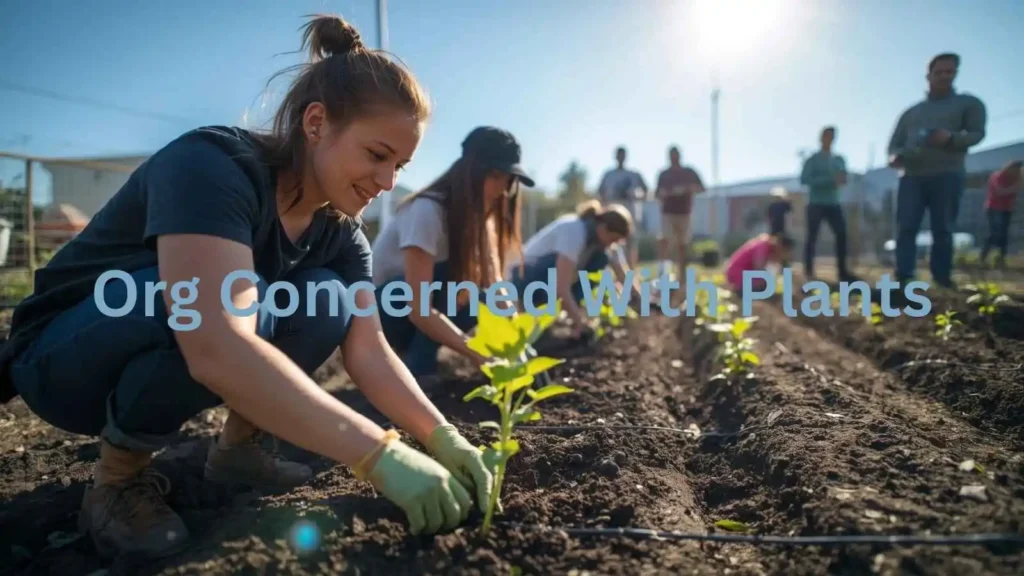
People often search for the keyword “org concerned with plants” when they see it in exams, crossword puzzles, biology notes, or online quizzes. However, many feel confused because the phrase looks incomplete or unusual. So, they want a quick and clear answer. In simple words, they are usually trying to learn about an organization related to plants, such as a botanical society, plant research institute, or conservation group.
Moreover, some users think this keyword is about spelling, while others think it is about vocabulary. As a result, confusion increases. Therefore, this article explains both meanings: the idea of an organization that works with plants and the language usage behind the phrase.
In addition, students often need this for MCQs, while writers need it for correct wording in articles. Because of this, the keyword helps solve two problems at once: meaning and usage.
So, if you want a fast answer, correct wording, and real-life examples, you are in the right place. Let’s break it down step by step and make it easy.
Org Concerned With Plants – Quick Answer
An “org concerned with plants” means an organization that studies, protects, or promotes plants.
Examples:
- Botanical gardens
- Plant research institutes
- Environmental NGOs focused on trees
- Agricultural departments
In short, it refers to any group that works for plant science, farming, or conservation.
The Origin of “Org Concerned With Plants”
The word “org” is a short form of organization.
Meanwhile, concerned with plants comes from basic biology terms related to botany.
Historically, plant study groups were called:
- Botanical societies
- Horticulture boards
- Agricultural unions
However, in modern exams and quizzes, people use short phrases. Therefore, “org concerned with plants” became popular in:
- Competitive exams
- Crossword puzzles
- Online MCQ platforms
Also, spelling differences happen because of regional English and short forms used in digital content.
British English vs American English Spelling
The keyword itself does not change much in spelling. However, related words do change.
Examples:
- British: organisation, programme, centre
- American: organization, program, center
Comparison Table
| Term Area | British English | American English |
|---|---|---|
| Organization | organisation | organization |
| Plant center | plant centre | plant center |
| Research program | research programme | research program |
So, while “org” stays the same, full forms may change by region.
Which Spelling Should You Use?
Your audience decides the spelling.
Use American English if:
- You write for US websites
- You publish blogs for global tech readers
- You prepare US exams
Use British English if:
- You study in UK or Pakistan
- You prepare Commonwealth exams
- You write academic essays
For Global SEO:
- Use American spelling more often
- But stay consistent in the full article
So, choose one style and stick to it.
Common Mistakes with “Org Concerned With Plants”
Many learners make small but serious errors.
❌ Wrong Examples:
- Org concerns with plants
- Organization about plants
- Org related plant
✅ Correct Forms:
- Org concerned with plants
- Organization concerned with plants
- Plant conservation organization
Also, avoid using “org” in formal writing. Instead, use organization.
“Org Concerned With Plants” in Everyday Examples
📧 Email:
Our school will visit an organization concerned with plants for environmental learning.
📰 News:
A local org concerned with plants launched a tree-saving project.
📱 Social Media:
Support every org concerned with plants. Save nature today!
📝 Formal Writing:
Many organizations concerned with plants contribute to biodiversity protection.
Thus, the phrase fits both casual and formal use, if written clearly.
“Org Concerned With Plants” – Google Trends & Usage Data
This keyword appears mostly in:
- Exam searches
- Crossword help queries
- Biology vocabulary searches
Popular Regions:
- South Asia
- UK
- Education-focused searches
People often search it during:
- Exam seasons
- Quiz competitions
- Online test preparation
So, the intent is mainly educational, not business-related.
Keyword Variations Comparison Table
| Variation | Meaning | Best Use |
|---|---|---|
| Org concerned with plants | Short exam phrase | MCQs, quizzes |
| Organization concerned with plants | Full formal phrase | Essays, articles |
| Botanical organization | Technical term | Academic writing |
| Plant conservation group | Modern usage | NGOs, media |
Therefore, choose the version that fits your purpose.
FAQs
1. What does “org concerned with plants” mean?
It means an organization that studies or protects plants.
2. Is this a scientific term?
No, it is a general exam or quiz phrase, not a technical term.
3. Can I use “org” in formal writing?
No. Use organization instead.
4. Is this keyword only used in biology?
Mostly yes, but it also appears in environment and agriculture topics.
5. What is the best synonym for this phrase?
Botanical organization or plant conservation group.
6. Why do students search this keyword?
Because it appears in MCQs, crosswords, and short-answer exams.
7. Does spelling change by country?
The phrase stays same, but organization/organisation changes by region.
Conclusion
The keyword “org concerned with plants” is simple, yet many learners find it confusing. However, once you understand that it means an organization working with plants, everything becomes clear. This phrase is mainly used in exams, quizzes, and short questions. Therefore, it is more educational than technical.
Moreover, spelling differences matter only when you use full forms like organization or centre. So, always match your spelling to your audience. For global writing, American English works better. For academic work in Pakistan or the UK system, British English is safer.
In addition, avoid using short forms like “org” in formal writing. Instead, use complete and clear language. Also, choose related terms like botanical society or plant conservation group when needed.
In short, use this keyword for quick answers, but use full phrases for professional writing. That way, you stay correct, clear, and confident in every situation.